Blog - Contracting 101: Hiring for IT Contract Jobs

If your company is looking to grow with flexibility, or if you’re a tech professional browsing job boards, understanding how to hire for, or secure, IT contract jobs can make all the difference. This post breaks down what “contracting” really means in today’s labor market, why companies like PeopleSolutions leverage it, and best practices whether you’re hiring or applying.
Why Contract Work Is a Big Deal
Recent data paints a clear picture: contracting is no longer a fringe strategy; it’s a core part of how work gets done in the U.S.
- In July 2023, the U.S. Bureau of Labor Statistics (BLS) found that 4.3% of U.S. workers (about 6.9 million people) held “contingent” jobs as their main employment.
- In addition, other “alternative work arrangements” like independent contractors (7.4%), on-call workers (1.7%), temporary-agency workers (0.6%), and contract-firm employees (0.5%), are a substantial slice of total employment.
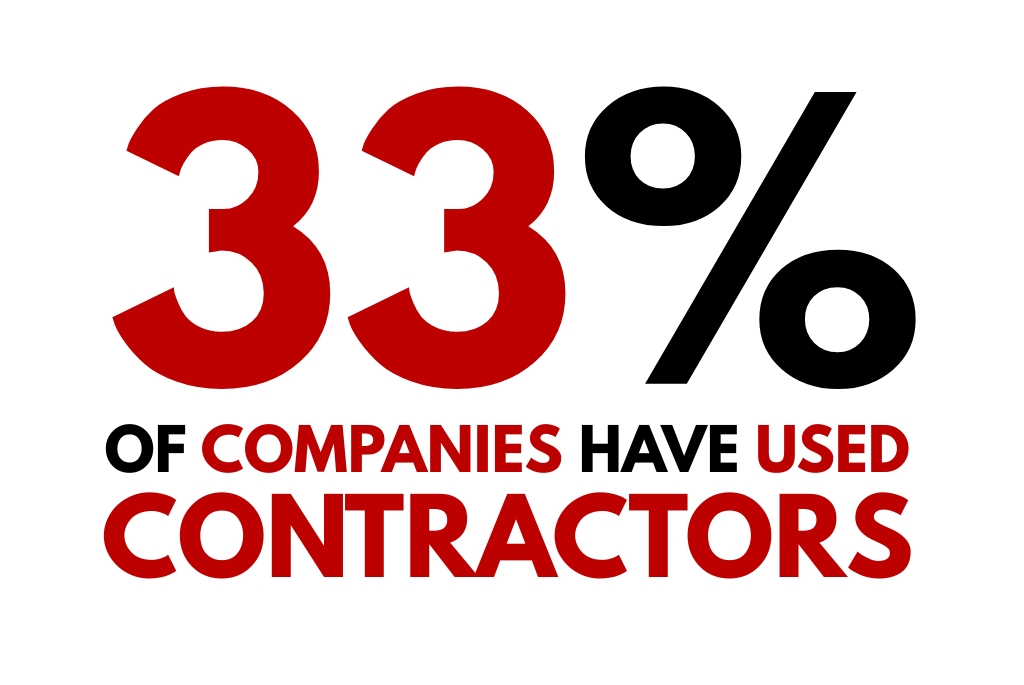
- On the employer side, a report by the U.S. Government Accountability Office (GAO) showed that in a 2020 survey, 33% of businesses said they used contractors/subcontractors or outside consultants.
Clearly, the flexible workforce is here to stay. For companies like PeopleSolutions, and for IT pros looking to work on contract, that makes understanding contract dynamics essential.
What Is an IT Contract Job (and What Does “Contract to Hire” Mean?)
What “Contract Job” Means
When someone says “IT contract job,” they typically mean one of the following:
- A time-limited assignment (e.g., six months implementing a new tool, migrating systems, building a feature)
- A role through a third-party contract or staffing firm (sometimes called a “contract-firm worker”)
- A “contingent” or “alternative arrangement”; meaning the job isn’t expected to be long-term or permanent
Many people confuse contract work with freelance or gig work. While there’s overlap (especially when independent contractors are involved), traditional IT contract jobs are often more structured: you’re plugged into a team, working on defined deliverables, but on a temporary or fixed-term basis.
What “Contract to Hire” Means
“Contract to hire” is a hybrid model that blends the flexibility of contracting with the potential for a full-time role. Under this model:
- A worker begins as a contractor, often through a staffing or consulting firm.
- After a defined period (e.g., 3-12 months), the company evaluates whether they’re a good fit.
- If things go well, the company offers a permanent position. If not, the contract ends.
For companies, contract to hire reduces risk. You can basically “test drive” a candidate before committing to a full-time hire. For talent, it’s a chance to prove your skills on real projects and perhaps score a full-time offer.
That’s why for many IT roles, contract to hire has become a go-to hiring strategy.
Why Companies Use Contracting (Especially IT-Focused Firms)
Here’s why many employers turn to contract and contract-to-hire staffing:
Flexibility and Speed
Projects ebb and flow. One quarter you might be launching a new product; next quarter you’re maintaining. Contracting lets you scale up (or down) quickly without long-term staffing commitments.
And according to the GAO, a third of companies surveyed reported using contractors or outside consultants, showing that flexibility is a common need within the industry.
Cost Management
Hiring a permanent employee involves more than salary; it involves benefits, onboarding, payroll taxes, and potential long-term commitments. Contracting sometimes enables companies to better manage costs and limit long-term obligations (though there are tradeoffs, which we’ll discuss below).
Access to Specialized Talent
IT projects often require niche skill sets: cloud migration, cybersecurity audits, DevOps pipelines, data analytics, system architecture, etc. Contractors bring in those skills exactly when needed without requiring a year-round commitment.
Faster Hiring Cycles
Permanent hiring often involves long recruitment cycles: sourcing, interviewing, negotiating, onboarding, cultural fit considerations. With contract to hire, companies can often get skilled talent on board in weeks then decide later whether to convert.
For a staffing firm like PeopleSolutions, this means being able to rapidly match businesses to skilled professionals and helping both sides get what they need with minimal friction.
The Tradeoffs: What to Know Before You Contract
Contracting and contract to hire aren’t magic; there are tradeoffs for both companies and contractors.
For Companies
- Potential higher hourly costs. While contractors avoid benefits costs, contract rates can be higher per hour than salaried equivalents (though total cost might still be lower when benefits and long-term commitments are considered).
- Limited long-term loyalty. Contractors may not feel the same sense of ownership or long-term commitment as full-time employees, which can impact engagement or institutional knowledge retention.
- Onboarding and offboarding overhead. With frequent changes, there may be repeated ramp-up and transition costs.
For Contractors / Job Seekers
- Less job stability. Contract roles are temporary by design. Even contract to hire doesn’t guarantee a full-time offer.
- Fewer benefits. Many contractors lack traditional benefits like health insurance, retirement plans, and paid leave unless they come through a firm that offers them.
- Uncertainty in long-term planning. Since contract duration is limited, it’s hard to plan longer-term finances or life events around them.
That said, for many IT professionals, contracting offers flexibility, variety, and the chance to build a broad portfolio of experience. In a fast-moving tech environment, that can be a major advantage.
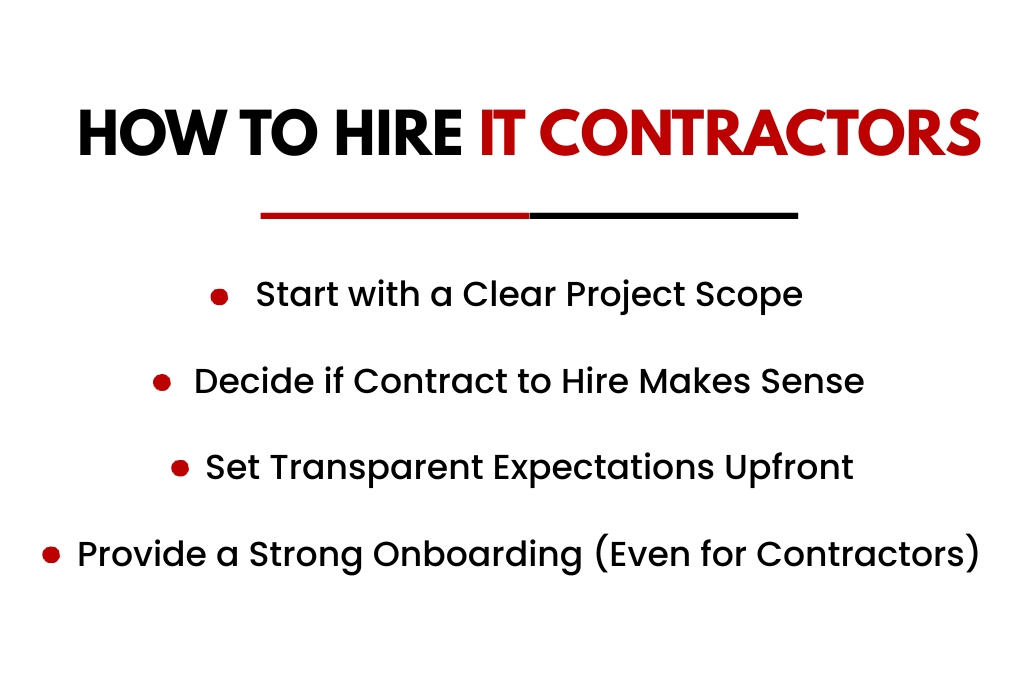
How to Hire Smart for IT Contract Jobs
If you’re at a company (or working with a staffing firm like PeopleSolutions) and want to make the most of contracting, here’s how to do it right.
Start with a Clear Project Scope
Contract jobs work best when the scope is defined. Before you hire, ask:
- What exactly needs to be done? Deliverables, deadlines, success criteria.
- How long do we expect the project to last?
- What skills/technology stack are required?
If the project is badly scoped, contractors may struggle, or worse, deliver ambiguous results.
Decide if Contract to Hire Makes Sense
For roles you foresee recurring or expanding: contract to hire is a strong choice. It lets you vet performance and fit before committing to long-term employment.
For short-term, one-off projects, a pure contract model may be simpler.
Set Transparent Expectations Upfront
Clarity is key for both you and the contractor. Make sure job duration, deliverables, compensation, and potential for conversion are all discussed upfront.
That transparency builds trust, sets realistic expectations, and reduces misunderstandings down the line.
Provide a Strong Onboarding (Even for Contractors)
Treat contractors like real team members during the contract period. Give them the necessary access, clear documentation, introductions, collaboration tools, and context.
A good onboarding improves productivity, reduces ramp-up time, and increases the chance that the contractor will produce quality work.
Why IT Professionals Should Consider Contract Work (and Contract to Hire)
Contracting isn’t just for companies; many tech professionals thrive in this model. Here’s why:
- Diverse experience: Instead of doing the same job for years, contract work often means new challenges, new companies, new tech stacks. These positions are great for building a broad resume.
- Flexibility: Contract work can offer better control over schedule, sometimes remote roles, and opportunities to choose projects that align with your interests.
- Potential for full-time conversion: With contract to hire, you still get a shot at stable employment if you perform and fit well.
- Speedy hiring: Unlike lengthy full-time hiring cycles, contract gigs often start fast which can be a relief if you’re between jobs or want to get working soon.
That said, it’s not for everyone. If you value steady paychecks, benefits, and long-term stability, traditional full-time employment may still be the better fit.
What the Data Says and What It Means for IT Contract Jobs
The data from the BLS Contingent Worker Supplement (2023) shows that contracting is a substantial piece of the employment pie.
What’s important is this: as more companies embed contracting into their workforce strategy (especially for skills-based work like IT) demand for qualified tech contractors will likely continue to grow.
Furthermore, a GAO study of business hiring patterns shows that about one-third of companies already use contractors or outside consultants.
That translates to opportunity: for IT professionals, contract jobs and contract-to-hire arrangements can be viable, and often lucrative, career paths. And for companies like PeopleSolutions, there’s real value in enabling these matches: delivering skilled IT talent, on-demand, with flexibility and speed.
Final Thoughts
If you’re a hiring manager in tech, understanding how to use contract roles and contract to hire strategically can give you an edge.
- Contracting gives you flexibility, access to highly specialized talent, and faster turnaround when projects demand it.
- Contract to hire offers a “trial run” letting you vet a worker’s output and fit before committing permanently.
- For IT professionals, contract work can deliver variety, skill-building, and the possibility of full-time conversion without the long hiring lead times of traditional employment.
In a world where technology evolves fast and projects come and go, contract staffing is a smart, strategic option.
Looking to fill a role for an IT contract job? Reach out to the experts at PeopleSolutions to start your search!
