Blog - The 5 Best Contract Jobs In 2026 For Stability and High Earnings

Contract jobs in 2026 are no longer defined by flexibility alone. They are defined by necessity.
Across the U.S., employers are using contract talent to solve problems they cannot defer: regulatory deadlines, production bottlenecks, system migrations, patient coverage, and security exposure. Permanent hiring remains selective. Work does not slow down. The gap is filled by contractors who can step in without training cycles or internal politics.
That shift has quietly changed which contract jobs actually last. Some roles look attractive but disappear when budgets tighten. Others stay funded because failure costs more than the hourly rate.
This analysis focuses on five contract jobs that continue to show consistent hiring, defensible pay, and repeat demand in 2026.
What Separates Strong Contract Jobs from Short-Term Gigs
The best contract jobs share a few practical traits.
They are tied to outcomes leadership can’t miss. They require experience that can’t be improvised. And they usually exist because internal teams are already stretched thin.
In practice, these roles appear earlier in project planning than they did five years ago. Hiring managers now budget for contractors up front rather than reacting to burnout or missed deadlines. That shift favors experienced contract workers who understand delivery, not just task execution.
Contract Software Developer
Why This Role Continues to Dominate Contract Hiring
Contract software developers remain the most consistently funded contract job in the U.S. market, not because companies want flexibility, but because internal teams cannot absorb the work.
System modernization, cloud migration, and customer-facing platforms continue to generate backlogs that full-time teams cannot clear. Contractors are brought in to own defined slices of that work, often with limited supervision and clear delivery expectations.
The U.S. Bureau of Labor Statistics projects software developer employment growth of 25% from 2022 to 2032, with contract hiring capturing a significant share of that demand as companies control fixed headcount.
Pay and Where It Breaks Down
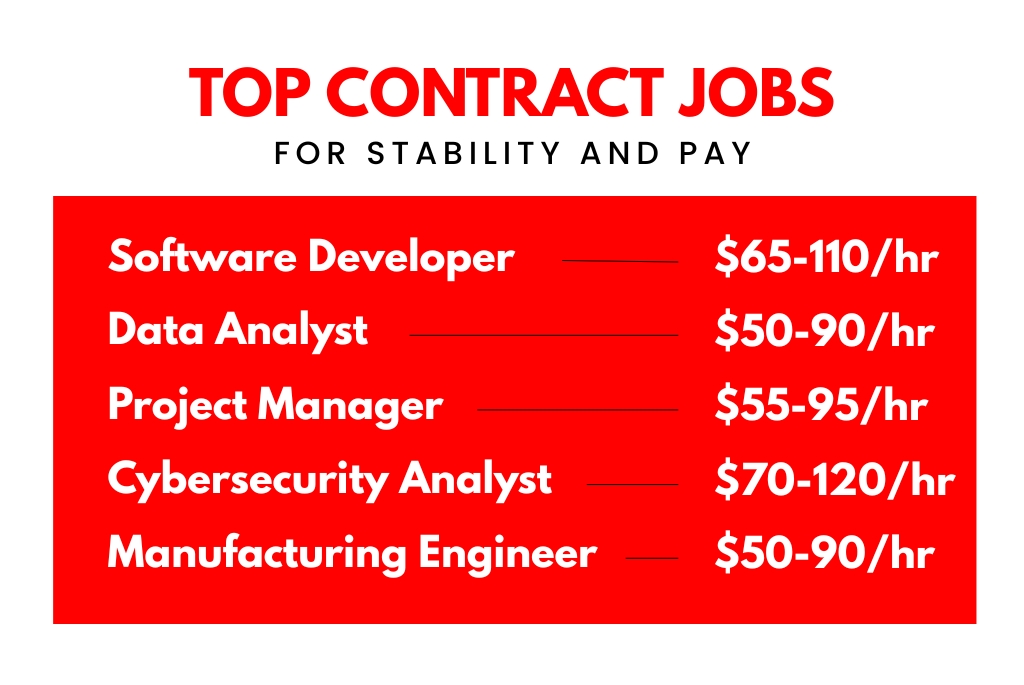
In 2026, contract software developers typically earn between $65 and $110 per hour. Rates move quickly based on specialization. Cloud infrastructure, data engineering, and security-heavy environments sit at the top of the range.
The risk for contractors is assuming all development work pays the same. Maintenance-heavy roles and poorly scoped migrations often cap rates and extend timelines without upside.
What Employers Expect
Contract developers are not hired to learn the system. They’re hired to stabilize it.
Most roles involve production code, integration work, or remediation of technical debt. Documentation quality matters because handoff is assumed. Teams tolerate fewer mistakes from contractors than from internal hires.
Where These Jobs Get Filled
High-quality contracts rarely stay public. They move through specialized recruiters, prior vendor relationships, and internal referrals. PeopleSolutions sees the strongest demand in regulated environments where downtime or compliance failures carry financial penalties.
Contract Data Analyst
Why This Role Keeps Slipping into Contract Budgets
Contract data analysts are rarely part of the original hiring plan. They show up when leadership realizes the numbers do not line up or cannot be explained fast enough.
Dashboards disagree. Forecasts miss. Executives ask basic questions and get three different answers. At that point, a contractor gets approved to clean up the mess without reopening the org chart.
The U.S. Bureau of Labor Statistics projects strong growth across data-related roles, with data science and analytics functions expanding well above average through the decade. Much of the execution work lands with contract analysts brought in to stabilize reporting and decision support.
Pay Depends on How Bad the Data Is
In 2026, contract data analysts typically earn between $50 and $95 per hour. The range is wide for a reason.
Clean datasets and defined questions sit at the low end. Fragmented systems, undocumented assumptions, and executive visibility push rates higher. Many contractors underestimate how political these roles can become once numbers start changing decisions.
What the Work Involves
Despite the title, much of the job is not analysis. It is reconciliation.
Contract analysts spend time tracing definitions, validating sources, and explaining why metrics changed after being “fixed.” SQL, Excel, and visualization tools matter, but judgment matters more. Employers expect answers that hold up in meetings, not just correct queries.
Where These Contracts Get Filled
High-quality data analyst contracts move through specialized recruiters and internal referrals, often after a failed internal attempt. PeopleSolutions sees consistent demand where reporting touches revenue forecasts, operational KPIs, or regulatory submissions.
Contract Project Manager
Why Companies Keep Paying for This Role
Contract project managers are brought in when projects start slipping or when internal leaders are stretched too thin to manage execution.
These roles persist because missed timelines create downstream costs. In regulated industries and IT-heavy environments, failure often costs more than the contractor.
Pay and Engagement Reality
Rates typically range from $55 to $95 per hour. Industry knowledge matters more than certifications. A healthcare IT project manager and a construction project manager operate under very different constraints.
Contracts often extend based on delivery rather than time served.
What Makes or Breaks These Roles
Contract project managers are judged on clarity and follow-through. Stakeholder communication, risk management, and deadline control matter more than methodology.
Organizations expect these contractors to absorb ambiguity and impose structure without formal authority.
Contract Cybersecurity Analyst
Why Security Work Favors Contract Models
Security needs are urgent but uneven. Incident response, audits, remediation efforts, and compliance programs often have defined timelines that do not justify permanent hires.
Regulatory pressure keeps security budgets intact even when other spending slows.
The BLS projects information security analyst employment growth of 32% from 2022 to 2032.
Pay And Contract Scope
Contract cybersecurity analysts typically earn $70 to $120 per hour. Clearance requirements, industry risk, and threat exposure drive rates more than certifications alone.
Short-term assessments pay well but require rapid delivery. Longer contracts often involve documentation-heavy compliance work.
What Employers Look For
Hands-on experience matters more than theory. Employers favor analysts who have handled real incidents and understand operational environments, not just frameworks.
Contract Manufacturing Engineer
Why Manufacturing Engineering Is Back In Demand
U.S. manufacturing investment continues to rise, driven by reshoring, automation, and infrastructure funding. Engineering talent has not kept pace.
Contract manufacturing engineers support plant expansions, equipment validation, and process optimization without long-term payroll risk.
The BLS reports steady demand for industrial engineers tied to productivity improvements and automation.
Pay and Project Cycles
Rates typically fall between $50 and $90 per hour. Specialized process knowledge commands premiums, especially in regulated production environments.
Contracts often align with capital projects and run six to twelve months.
Where These Roles Live
Manufacturers rely on technical staffing partners to vet experience quickly. Public postings attract volume but not always qualified candidates.
How Contract Hiring Is Quietly Changing
Two shifts shape the contract market for 2026.
First, contractors are being planned for earlier. Many roles now appear during budgeting rather than after failure.
Second, repeat contracting is becoming common. High-performing contractors cycle through multiple engagements with the same employer without ever converting to full-time.
This creates stability for contractors who deliver consistently and understand business constraints.
Where Contract Workers Gain Real Leverage
Leverage comes from proximity to non-negotiable outcomes. Compliance deadlines, revenue systems, and operational uptime drive the most durable demand.
Temporary work tied to discretionary projects disappears first. Contractors who understand the business driver behind the role price and position themselves more effectively.
PeopleSolutions tracks these patterns across life sciences, technology, and engineering where contract demand remains tied to risk rather than convenience.
Key Takeaways For Contract Workers In 2026
The strongest contract jobs in 2026 are defined by necessity.
Software development, data analytics, project management, cybersecurity, and manufacturing engineering continue to lead because organizations cannot pause the work they support.
For many professionals, contract jobs now offer more control and income stability than traditional roles, provided they align skills with demand that persists under pressure.
